
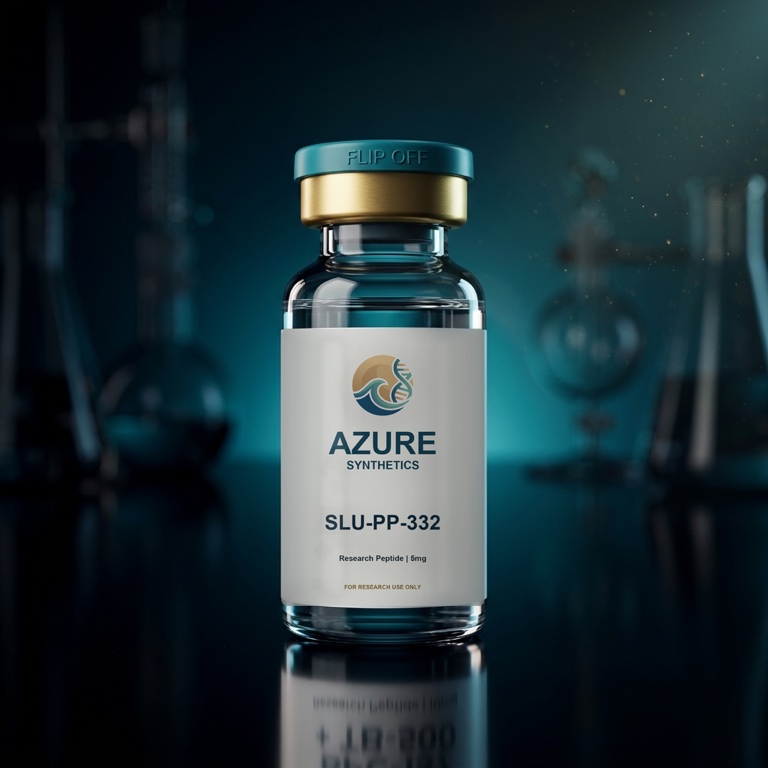
Research material
SLU-PP-332
Lyophilized metabolic research compound
SLU-PP-332 is an ERR-pathway research compound studied in exercise-mimetic and metabolic adaptation literature.
Support can confirm any currently available COAs or batch documentation for this product.
Request available documentsConfirm an optional email signup to receive a single-use 10% welcome code.
Get catalog updatesPour la recherche en laboratoire uniquement. Pas pour un usage humain ou vétérinaire. Non destiné à diagnostiquer, traiter, guérir, atténuer ou prévenir une maladie.
Conserver scellé, froid, sec et protégé des variations de chaleur. Confirmez le stockage spécifique au produit à l'arrivée.
Emballé pour la stabilité du transit avec une assistance aux commandes disponible pour les itinéraires par temps chaud.
Batch-linked certificate support is available through the documentation desk.
Contexte de recherche
Profil de recherche SLU-PP-332
SLU-PP-332 is a small-molecule research compound associated with estrogen-related receptor signaling rather than a peptide hormone pathway. Preclinical studies use it to investigate oxidative metabolism, mitochondrial gene programs, skeletal-muscle adaptation, energy expenditure, and exercise-mimetic phenotypes. The ERR family helps regulate transcriptional networks involved in cellular energy use, so studies often measure gene expression, mitochondrial markers, endurance-related endpoints, and tissue-specific metabolic changes. This compound is best suited to mechanistic cell and animal research that specifically requires an ERR-pathway agonist. The published evidence is preclinical, and experimental findings do not establish human safety, effectiveness, or an appropriate personal-use context.
Mécanisme proposé
A synthetic agonist reported to activate estrogen-related receptors, especially ERRalpha, ERRbeta, and ERRgamma. ERR activation regulates transcriptional programs involved in mitochondrial biogenesis, oxidative phosphorylation, fatty-acid oxidation, and oxidative muscle-fiber identity.
Effets rapportés dans les études
- Cell studies reported induction of ERR-regulated oxidative and mitochondrial gene programs.
- Mouse studies reported increased oxidative muscle characteristics, endurance, energy expenditure, and resistance to diet-related metabolic changes.
- The compound is a small molecule rather than a peptide, and no established human efficacy or safety profile exists.
Critères de recherche courants
ERR transcriptional activity, mitochondrial genes, oxygen consumption, fatty-acid oxidation, muscle-fiber type, exercise capacity, energy expenditure, glucose tolerance, and body composition.
Preuves et limites
Evidence is limited to mechanistic and animal research. Human effects, pharmacokinetics, and safety remain unestablished.
External reading
Literature for context—not product proof.
Third-party sources describe their own research materials and methods. They do not validate a specific Azure catalog batch.
Support and documentation
Questions about this product?
What documentation can I request before ordering?
Before ordering, contact support with the product name, selected format, andu2014if availableu2014an order or batch reference to request available batch-linked documentation.
What should I confirm before ordering?
Compare the product name, listed amount, physical form, storage note, price, and documentation route. When the order arrives, match the product and lot or batch reference to the order record and available documentation.