
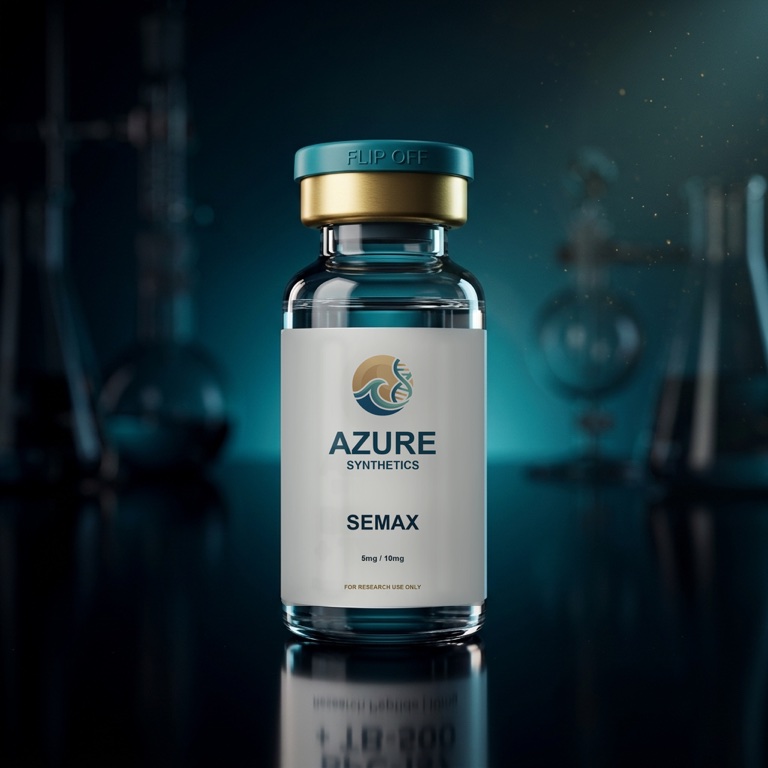
Neuro-signaling research
Semax
Lyophilized neuro-signaling research peptide
Semax is an ACTH-fragment research peptide discussed in neurotrophic, stress-response, and central nervous system literature.
This product has an available COA with reported batch details and test results.
Open available COAConfirm an optional email signup to receive a single-use 10% welcome code.
Get catalog updatesAlleen voor laboratoriumonderzoek. Niet voor menselijk of diergeneeskundig gebruik. Niet bedoeld voor het diagnosticeren, behandelen, genezen, verzachten of voorkomen van ziekten.
Afgesloten, koud, droog en beschermd tegen hitteschommelingen bewaren. Bevestig productspecifieke opslag bij aankomst.
Verpakt voor stabiliteit tijdens het transport, met bestelondersteuning beschikbaar voor routes bij warm weer.
Batch-linked certificate support is available through the documentation desk.
Onderzoekscontext
Semax onderzoeksprofiel
Semax is a synthetic peptide derived from the ACTH(4-7) fragment and extended with a Pro-Gly-Pro sequence. Research explores neurotrophic signaling, BDNF-related markers, stress responses, gene expression, neurotransmission, and experimental models of neural injury or cognitive performance. It is distinct from Selank, a tuftsin analog studied more often in stress and neuroimmune contexts, and from DSIP, which is associated with sleep-adjacent literature. Semax is best selected when the project specifically requires an ACTH-fragment neuro-signaling reference. Much of the literature is preclinical or regional, and variations in study quality and experimental design should be considered when interpreting results.
Voorgesteld mechanisme
An ACTH(4-7)-derived peptide extended with Pro-Gly-Pro. No single receptor mechanism is established; proposed pathways include changes in BDNF and NGF expression, melanocortin-related signaling, monoamine systems, inflammatory pathways, and transcription after neural stress.
In studies gerapporteerde effecten
- Cell and animal studies report altered BDNF-related expression, neuroprotection, inflammatory markers, and outcomes in ischemia or neural-injury models.
- Behavioral studies in animals report changes in learning, attention, stress response, and locomotor endpoints.
- Human evidence is limited, regionally concentrated, and not sufficient to establish broad cognitive or neuroprotective effects.
Veelgebruikte onderzoekseindpunten
BDNF and NGF expression, monoamines, inflammatory cytokines, infarct or injury measures, neuronal survival, learning and memory tasks, stress behavior, EEG, and pharmacokinetics.
Bewijs en beperkingen
The literature is primarily preclinical with limited regional clinical work. Mechanism, reproducibility, and generalizable human effects remain uncertain.
External reading
Literature for context—not product proof.
Third-party sources describe their own research materials and methods. They do not validate a specific Azure catalog batch.
Support and documentation
Questions about this product?
What documentation can I request before ordering?
Open the available COA on this page. Before ordering, confirm the named material and listed format; when the order arrives, match the document identifiers to the supplied lot.
What should I confirm before ordering?
Compare the product name, listed amount, physical form, storage note, price, and documentation route. When the order arrives, match the product and lot or batch reference to the order record and available documentation.
Keep comparing
Compare other catalog records.
Explore related research materials. These are not a combined-use recommendation.
-
Neuro-signaling Onderzoekspeptide
Selank
Selank is a tuftsin analog research peptide discussed in anxiety-model, immune-neuroendocrine, stress-response, and neurotransmission literature.
- Vorm
- Gevriesdroogd poeder
- Hoeveelheid
- 5 mg
Prijsklasse: 37.99 $ tot 216.99 $ Opties selecteren Dit product heeft meerdere variaties. Deze optie kan gekozen worden op de productpagina