
Metabolic research
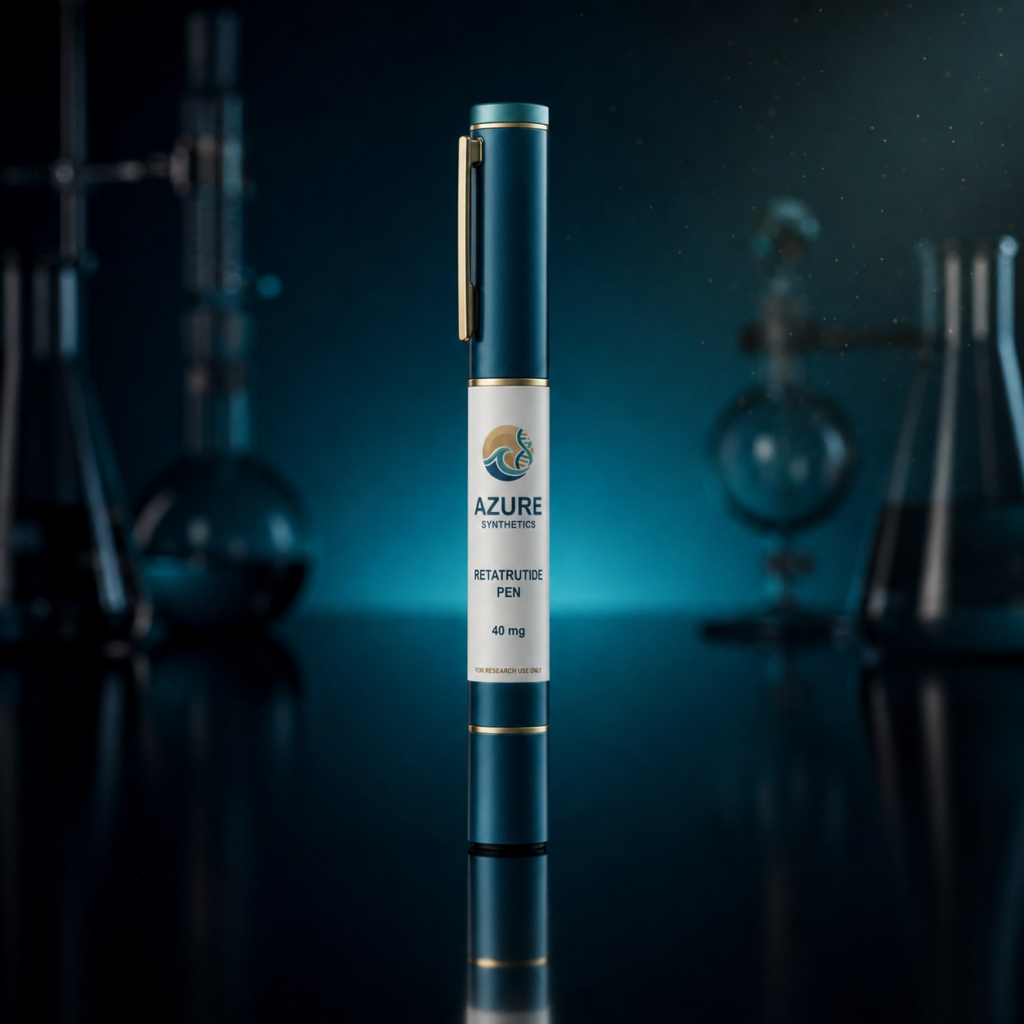
GLP-3 (RT) Pen – 40 mg
40 mg triple-agonist research pen
GLP-3 (RT) Pen – 40 mg is researched in research peptide comparison, with literature context focused on mechanism, pathway role, and evidence maturity.
This product has an available COA with reported batch details and test results.
Open available COAConfirm an optional email signup to receive a single-use 10% welcome code.
Get catalog updatesFor laboratory research use only. Not for human or veterinary use. Not intended to diagnose, treat, cure, mitigate, or prevent disease.
Keep sealed, cold, dry, and protected from heat swings. Confirm product-specific storage on arrival.
Packed for transit stability with order support available for warm-weather routes.
Batch-linked certificate support is available through the documentation desk.
Research context
GLP-3 (RT) Pen – 40 mg research profile
GLP-3 (RT) Pen – 40 mg is supplied for controlled laboratory research. Material-specific context and available support are presented separately from external literature. External publications describe their own study materials and methods and do not independently establish the identity, performance, safety, or suitability of this catalog item.
Molecular class
39-residue acylated multi-receptor agonist
Sequence / composition
A 39-amino-acid engineered backbone with non-native substitutions and a C20 fatty-diacid side chain.
Research design note
The lipid side chain is used in pharmacology research to prolong exposure; receptor activity is studied across GIPR, GLP-1R, and GCGR.
Proposed mechanism
A compound-specific proposed mechanism has not yet been added for GLP-3 (RT) Pen – 40 mg. Confirm molecular identity before assigning a receptor or pathway.
Effects reported in studies
- No compound-specific experimental effects are listed until the molecular identity and literature record are confirmed.
Common research endpoints
Identity, purity, amount, stability, pathway activity, model-specific endpoints, and appropriate controls.
Evidence and limitations
External literature must be matched to the exact material and study model before conclusions are drawn.
External reading
Literature for context—not product proof.
Third-party sources describe their own research materials and methods. They do not validate a specific Azure catalog batch.