
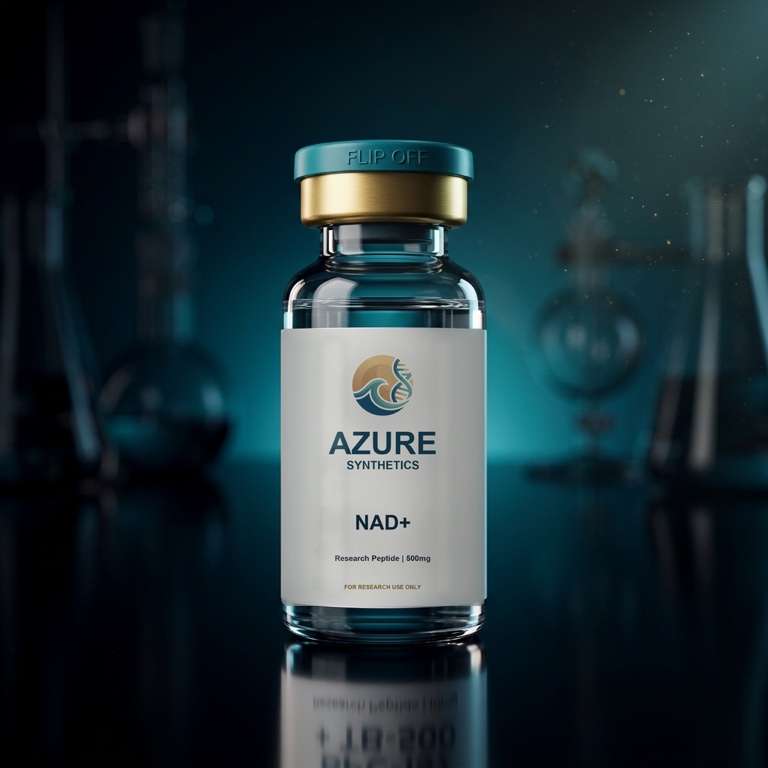
Mitochondrial + redox research
NAD+
Lyophilized mitochondrial and cellular-signaling research material
NAD+ is a cellular coenzyme research compound central to redox biology, mitochondrial metabolism, sirtuin activity, and energy-transfer literature.
This product has an available COA with reported batch details and test results.
Open available COAConfirm an optional email signup to receive a single-use 10% welcome code.
Get catalog updatesAlleen voor laboratoriumonderzoek. Niet voor menselijk of diergeneeskundig gebruik. Niet bedoeld voor het diagnosticeren, behandelen, genezen, verzachten of voorkomen van ziekten.
Afgesloten, koud, droog en beschermd tegen hitteschommelingen bewaren. Bevestig productspecifieke opslag bij aankomst.
Verpakt voor stabiliteit tijdens het transport, met bestelondersteuning beschikbaar voor routes bij warm weer.
Batch-linked certificate support is available through the documentation desk.
Onderzoekscontext
NAD+ onderzoeksprofiel
NAD+ is nicotinamide adenine dinucleotide, a central cellular coenzyme rather than a peptide. It participates in redox reactions and serves as a substrate for enzymes including sirtuins, PARPs, and CD38. Laboratory research measures NAD+/NADH balance, mitochondrial metabolism, DNA-repair signaling, oxidative stress, enzyme activity, and cellular responses to changing coenzyme availability. Exogenous NAD+ may behave differently across cell types and delivery systems because membrane transport and extracellular metabolism affect exposure. It is selected for direct coenzyme and redox studies, while precursors and pathway modulators answer different experimental questions. Foundational biological importance does not by itself establish a therapeutic outcome for a catalog material.
Voorgesteld mechanisme
NAD+ is both a redox cofactor for dehydrogenases and a consumed substrate for sirtuins, PARPs, CD38, and other enzymes. The NAD+/NADH ratio influences electron transfer, mitochondrial metabolism, DNA-repair signaling, calcium-related pathways, and cellular stress responses.
In studies gerapporteerde effecten
- Cell studies show that changing NAD availability alters redox state, mitochondrial respiration, sirtuin activity, PARP activity, and stress responses.
- Animal studies of NAD precursors or pathway enzymes report metabolic and age-associated effects, but these are not identical to direct extracellular NAD exposure.
- Cellular uptake and extracellular breakdown of intact NAD+ vary by tissue and model, creating major interpretation limits.
Veelgebruikte onderzoekseindpunten
NAD+/NADH ratio, ATP, oxygen consumption, lactate, sirtuin and PARP activity, DNA-damage response, CD38 activity, mitochondrial function, metabolomics, and cellular uptake.
Bewijs en beperkingen
NAD biology is foundational, but direct administered NAD+, its precursors, and genetic pathway manipulation are different interventions and should not be conflated.
External reading
Literature for context—not product proof.
Third-party sources describe their own research materials and methods. They do not validate a specific Azure catalog batch.
Support and documentation
Questions about this product?
What documentation can I request before ordering?
Open the available COA on this page. Before ordering, confirm the named material and listed format; when the order arrives, match the document identifiers to the supplied lot.
What should I confirm before ordering?
Compare the product name, listed amount, physical form, storage note, price, and documentation route. When the order arrives, match the product and lot or batch reference to the order record and available documentation.