
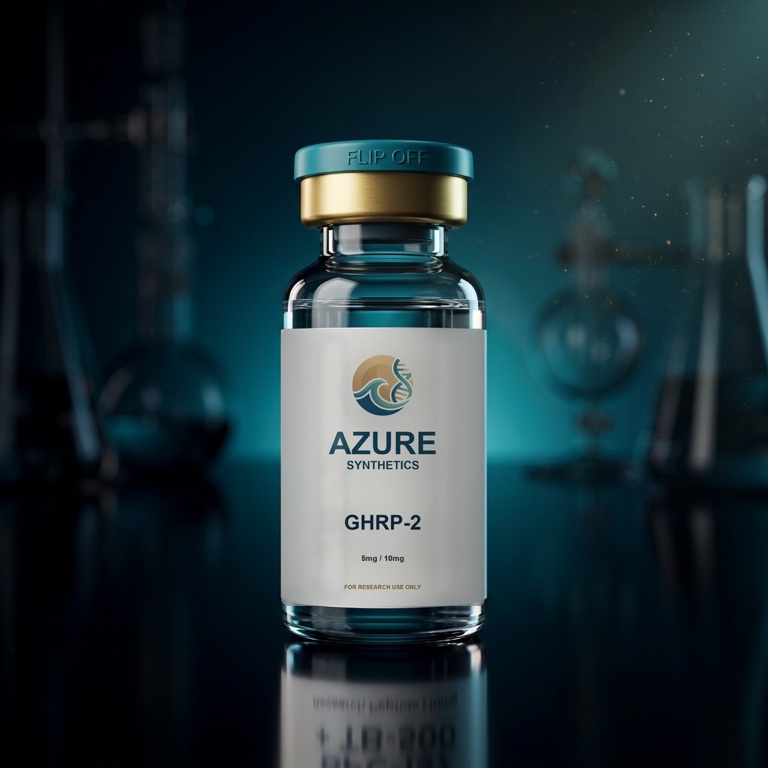
Endocrine signaling research
GHRP-2
Lyophilisiertes Peptid zur Forschung zu endokrinen Signalen zur Systemüberprüfung
GHRP-2 is a growth hormone secretagogue research peptide studied around ghrelin-receptor activity and GH-release models.
Support can confirm any currently available COAs or batch documentation for this product.
Request available documentsConfirm an optional email signup to receive a single-use 10% welcome code.
Get catalog updatesNur für Laborforschungszwecke. Nicht für den menschlichen oder veterinärmedizinischen Gebrauch bestimmt. Nicht zur Diagnose, Behandlung, Heilung, Linderung oder Vorbeugung von Krankheiten bestimmt.
Verschlossen, kalt, trocken und vor Hitzeschwankungen geschützt aufbewahren. Bestätigen Sie die produktspezifische Lagerung bei der Ankunft.
Verpackt für Transportstabilität mit Bestellunterstützung für Routen bei warmem Wetter.
Batch-linked certificate support is available through the documentation desk.
Forschungskontext
GHRP-2 Forschungsprofil
GHRP-2 is a synthetic growth hormone secretagogue studied through the ghrelin receptor pathway. Research examines GH-release magnitude and timing, endocrine-response markers, receptor pharmacology, appetite-related observations, and comparisons with GHRP-6, ipamorelin, or GHRH analogs. Its experimental profile is not identical to ipamorelin, which is often studied for greater selectivity, or GHRP-6, which is frequently associated with stronger appetite-pathway observations. GHRP-2 is useful as an established secretagogue comparator in GH-axis work. Study design should separate direct GHS-R signaling from GHRH-receptor activity and should not translate endocrine findings into personal-use or treatment recommendations.
Vorgeschlagener Mechanismus
A synthetic agonist at GHS-R1a. It stimulates pituitary growth-hormone release and also engages hypothalamic ghrelin-related pathways; endocrine selectivity is lower than that reported for ipamorelin.
In Studien berichtete Effekte
- Human studies reported marked acute GH release, with responses influenced by dose, age, nutrition, and concurrent GHRH signaling.
- Studies also reported appetite-related effects and changes in ACTH, cortisol, or prolactin under some conditions.
- Repeated exposure can produce altered responsiveness or desensitization depending on the experimental schedule.
Häufige Forschungsendpunkte
GHS-R potency, GH peak and area under the curve, ACTH, cortisol, prolactin, food intake, glucose, receptor desensitization, and synergy experiments with GHRH.
Evidenz und Grenzen
Human endocrine pharmacology and preclinical evidence exist, but long-term effects and catalog-product equivalence are not established.
External reading
Literature for context—not product proof.
Third-party sources describe their own research materials and methods. They do not validate a specific Azure catalog batch.
Support and documentation
Questions about this product?
What documentation can I request before ordering?
Before ordering, contact support with the product name, selected format, andu2014if availableu2014an order or batch reference to request available batch-linked documentation.
What should I confirm before ordering?
Compare the product name, listed amount, physical form, storage note, price, and documentation route. When the order arrives, match the product and lot or batch reference to the order record and available documentation.