
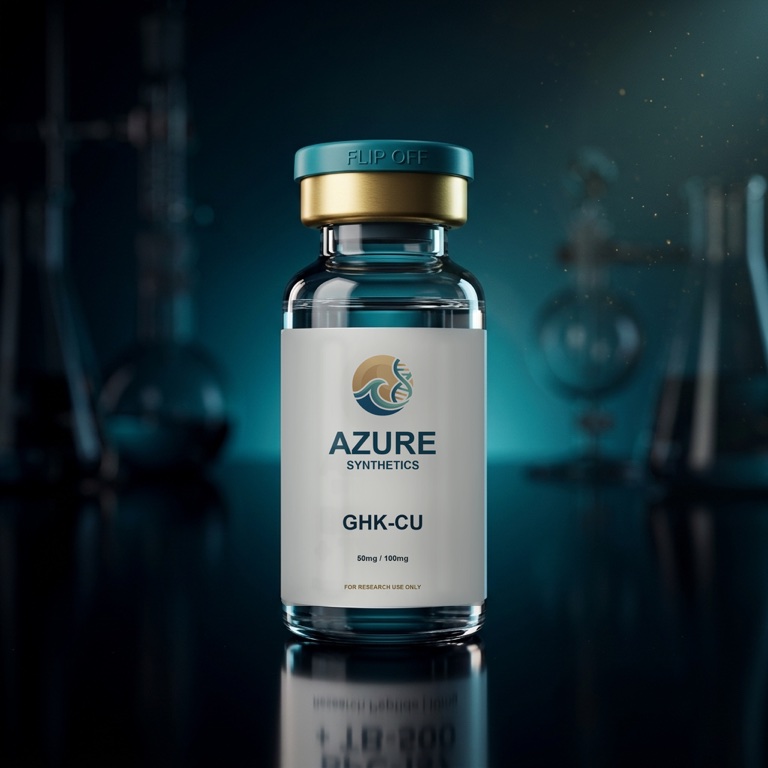
Tissue-signaling research
GHK-Cu
Lyophilized dermal or melanocortin research peptide
GHK-Cu is a copper tripeptide research compound connected to dermal matrix, collagen, extracellular-matrix, and wound-model literature.
This product has an available COA with reported batch details and test results.
Open available COAConfirm an optional email signup to receive a single-use 10% welcome code.
Get catalog updatesSomente para uso em pesquisa laboratorial. Não é para uso humano ou veterinário. Não se destina a diagnosticar, tratar, curar, mitigar ou prevenir doenças.
Mantenha selado, frio, seco e protegido de oscilações de calor. Confirme o armazenamento específico do produto na chegada.
Embalado para estabilidade de trânsito com suporte para pedidos disponível para rotas em clima quente.
Batch-linked certificate support is available through the documentation desk.
Contexto de pesquisa
Perfil de pesquisa de GHK-Cu
GHK-Cu is the copper complex of the naturally occurring tripeptide glycyl-L-histidyl-L-lysine. It is studied in dermal, extracellular-matrix, wound, and cell-signaling models involving copper transport, collagen and elastin markers, fibroblast behavior, tissue remodeling, and gene-expression changes. Experimental outcomes can depend on copper loading, formulation, concentration, cell type, and delivery system, so literature on a finished topical formulation is not automatically comparable with isolated research material. GHK-Cu is most useful when a project specifically requires a copper-binding peptide reference rather than a general repair peptide. Product identity, copper complex status, amount, and batch documentation should be reviewed together.
Mecanismo proposto
GHK binds copper(II), forming a copper-peptide complex proposed to influence copper delivery, gene expression, extracellular-matrix remodeling, antioxidant enzymes, inflammatory signaling, and activity of fibroblasts and other repair-associated cells.
Efeitos relatados em estudos
- Cell and animal studies reported increased collagen, elastin, glycosaminoglycan, fibroblast activity, angiogenesis, and wound closure in selected models.
- Topical formulation studies reported changes in skin density, appearance, or fine-line measurements under formulation-specific conditions.
- Effects depend on copper complexation, concentration, formulation, penetration, cell type, and the biological model.
Desfechos comuns de pesquisa
Copper binding, collagen and elastin synthesis, matrix metalloproteinases, fibroblast migration, antioxidant markers, inflammatory cytokines, wound closure, skin imaging, and histology.
Evidências e limitações
Mechanistic and preclinical evidence is substantial, with some formulation-specific human cosmetic data. Results from finished formulations do not establish effects of isolated powder.
External reading
Literature for context—not product proof.
Third-party sources describe their own research materials and methods. They do not validate a specific Azure catalog batch.
Support and documentation
Questions about this product?
What documentation can I request before ordering?
Open the available COA on this page. Before ordering, confirm the named material and listed format; when the order arrives, match the document identifiers to the supplied lot.
What should I confirm before ordering?
Compare the product name, listed amount, physical form, storage note, price, and documentation route. When the order arrives, match the product and lot or batch reference to the order record and available documentation.