
Tissue-signaling research
BPC-157
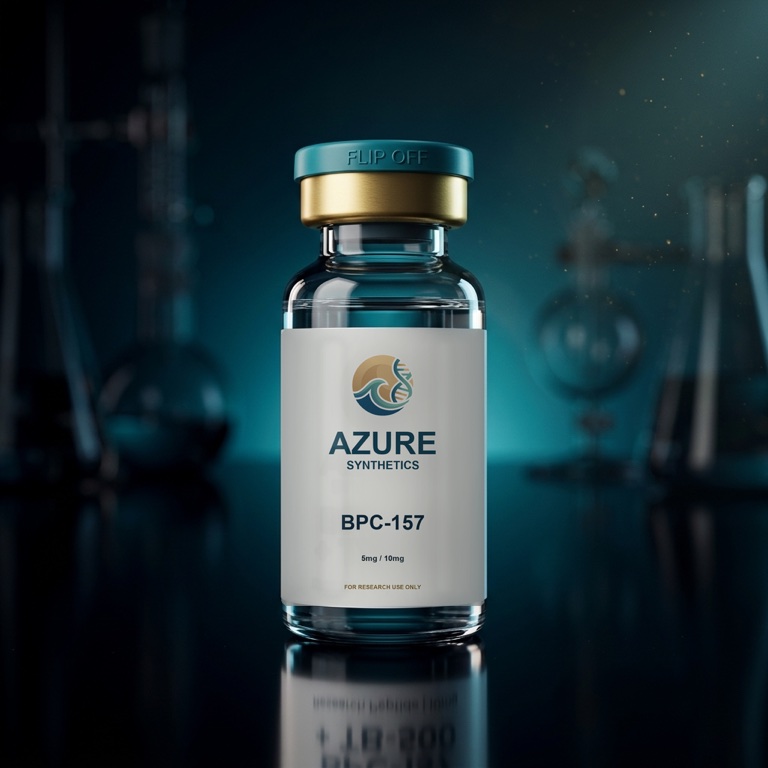
Lyophilized tissue-signaling peptide for preclinical pathway research
BPC-157 is a tissue-signaling research peptide discussed in preclinical tissue-stress, gastrointestinal, tendon, and wound-model literature. Human evidence remains limited.
This product has an available COA with reported batch details and test results.
Open available COAConfirm an optional email signup to receive a single-use 10% welcome code.
Get catalog updatesPour la recherche en laboratoire uniquement. Pas pour un usage humain ou vétérinaire. Non destiné à diagnostiquer, traiter, guérir, atténuer ou prévenir une maladie.
Conserver scellé, froid, sec et protégé des variations de chaleur. Confirmez le stockage spécifique au produit à l'arrivée.
Emballé pour la stabilité du transit avec une assistance aux commandes disponible pour les itinéraires par temps chaud.
Batch-linked certificate support is available through the documentation desk.
Contexte de recherche
Profil de recherche BPC-157
BPC-157 is a synthetic pentadecapeptide discussed primarily in preclinical tissue-signaling literature. Researchers have examined gastrointestinal, tendon, ligament, muscle, vascular, and wound models, with proposed involvement of nitric-oxide signaling, angiogenesis, fibroblast activity, inflammatory mediators, and extracellular-matrix responses. The breadth of proposed mechanisms is larger than the quality of the human evidence, which remains very limited. BPC-157 is therefore most appropriate for controlled laboratory or animal-model comparisons where endpoints and controls are clearly defined. It should not be presented as an established recovery treatment, and findings from individual preclinical models should not be generalized to people or to a specific catalog batch.
Mécanisme proposé
No single validated receptor has been established. Proposed mechanisms include modulation of nitric-oxide signaling, VEGF-related angiogenesis, FAK-paxillin and cytoskeletal signaling, fibroblast migration, inflammatory mediators, and gastrointestinal protective pathways.
Effets rapportés dans les études
- Rodent studies reported faster closure or improved histologic outcomes in selected tendon, ligament, muscle, skin, nerve, and gastrointestinal injury models.
- Preclinical studies reported changes in angiogenesis, fibroblast migration, nitric-oxide-related responses, and inflammatory markers.
- Reliable human outcome data are extremely limited, and animal repair findings have not established clinical effectiveness.
Critères de recherche courants
Wound closure, tensile strength, collagen organization, fibroblast migration, vascular density, VEGF and nitric-oxide markers, inflammatory cytokines, gastrointestinal lesions, and histology.
Preuves et limites
The evidence is overwhelmingly preclinical, with heterogeneous models and proposed pathways. Mechanism and human safety remain uncertain.
External reading
Literature for context—not product proof.
Third-party sources describe their own research materials and methods. They do not validate a specific Azure catalog batch.
Support and documentation
Questions about this product?
What documentation can I request before ordering?
Open the available COA on this page. Before ordering, confirm the named material and listed format; when the order arrives, match the document identifiers to the supplied lot.
What should I confirm before ordering?
Compare the product name, listed amount, physical form, storage note, price, and documentation route. When the order arrives, match the product and lot or batch reference to the order record and available documentation.